



Climate Change Only Trends After Disaster: A Dangerous Communication Habit Africa Must Unlearn
Across Nigeria, and indeed much of Africa, there is a troubling pattern in how we engage with climate change. We speak loudly—but only after disaster has arrived. Floods sweep through our cities and...

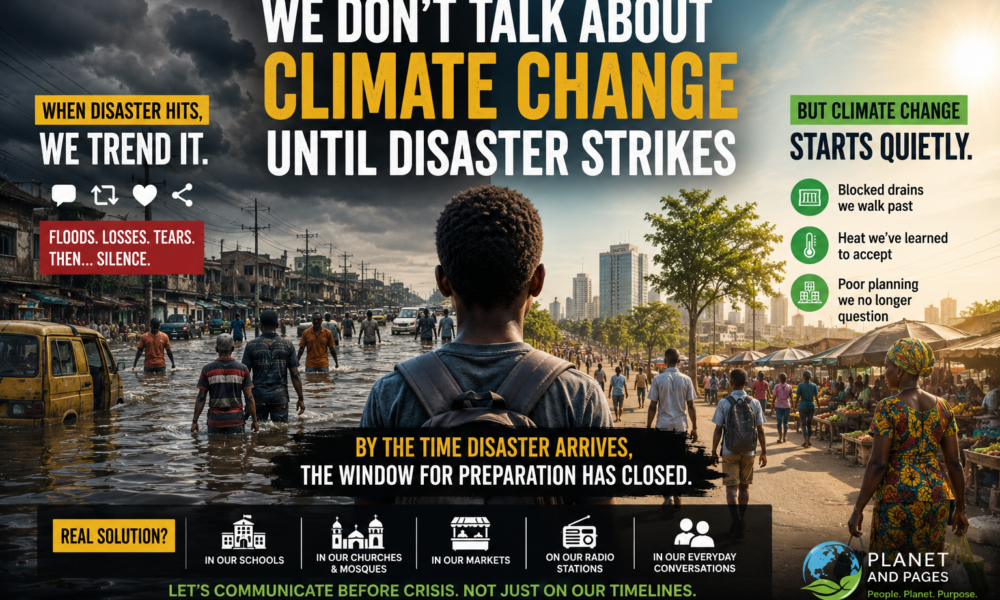
Across Nigeria, and indeed much of Africa, there is a troubling pattern in how we engage with climate change. We speak loudly—but only after disaster has arrived. Floods sweep through our cities and suddenly climate change trends. Videos circulate, timelines fill with outrage, and public officials issue statements. Then the water recedes, attention fades, and we move on to the next urgent matter.
This habit may feel harmless. It is anything but. It is one of the most dangerous communication failures we have normalised.Climate change does not begin with floods. It does not announce itself with sirens or hashtags. It begins quietly, almost invisibly, in the everyday conditions we have learned to tolerate. It begins with blocked drainage channels we walk past daily without question. It begins with heat so intense it disrupts sleep and productivity, yet has become “normal”. It begins with poorly planned developments rising on wetlands and flood plains, approved or ignored because enforcement is weak and memory is short.By the time floodwaters enter homes and streets, the real window for preparation has already closed. What we are left with then is reaction—emergency response, relief materials, condolence messages, and post-disaster explanations that often frame devastation as an “act of God” or an unusually heavy rainfall. These narratives comfort us, but they also absolve systems and institutions of responsibility.Research across Africa consistently shows that climate impacts are not made catastrophic by rainfall alone, but by human decisions—or the lack of them. Poor urban planning, weak infrastructure maintenance, inadequate waste management, and the marginalisation of environmental concerns in public discourse all combine to turn predictable climate risks into recurring tragedies. Yet our communication culture treats climate change as an occasional event, not a permanent condition shaping everyday life.This is where communication matters most.Real climate action cannot wait for crisis moments. It requires communication that moves before disaster. Climate conversations must leave conference halls and policy documents and enter the spaces where Nigerians and Africans live their daily lives. Into classrooms, where children learn not just science but responsibility. Into churches and mosques, where moral authority can shape collective behaviour. Into markets, where informal conversations often travel faster than official announcements. Into radio stations, community meetings, music, humour, and storytelling—forms of communication that have always shaped African societies.Social media has power, but timelines alone cannot build resilience. When climate change exists only as trending content, it competes with entertainment and outrage cycles. When it becomes part of everyday language and thinking, it shapes choices—how we build, where we build, what we throw away, and what we demand from those in power.We must therefore ask ourselves difficult questions. Why do we wait for disaster before listening? Why do we treat environmental warnings as background noise until tragedy forces them to the foreground? And what would change if climate communication became preventive rather than reactive?The floods, heatwaves, and environmental shocks we now experience are not warnings of a distant future. They are evidence of a present reality. Climate change is not waiting for us to trend it, debate it, or hashtag it.It is already here.If Africa is to respond meaningfully, we must unlearn our habit of silence before crisis. We must communicate earlier, deeper, and more honestly—rooted in lived experience, supported by research, and sustained beyond moments of disaster. Only then can climate action move from reaction to preparation, and from survival to resilience.



No Comment! Be the first one.