



Beyond the Rain: Why Flooding Has Become a Recurring Tragedy in West Africa
In recent days, distressing images have emerged from Lagos and Accra—streets swallowed by water, families stranded on rooftops, livelihoods washed away overnight. The immediate explanation offered is...

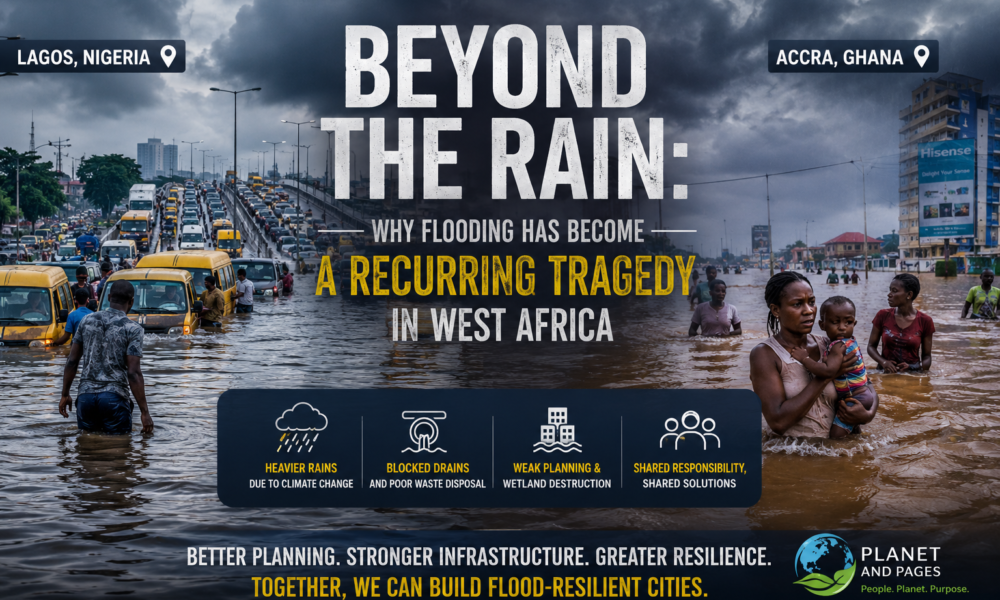
In recent days, distressing images have emerged from Lagos and Accra—streets swallowed by water, families stranded on rooftops, livelihoods washed away overnight. The immediate explanation offered is familiar: heavy rainfall. In Ghana, the President described the downpour as the heaviest the country had witnessed in years. In Accra alone, at least thirteen people reportedly lost their lives after a single night of rain. In Lagos, hundreds of families were displaced, their homes and possessions destroyed.
Yet, as painful as these scenes are, they are not new. And that is precisely the problem.As a Nigerian scholar who studies environmental communication and urban vulnerability, I find it increasingly troubling that we continue to frame these disasters as exceptional acts of nature. Accra has experienced major floods repeatedly since 2010. In Nigeria, the 2012 floods displaced more than two million people across several states. Similar patterns have followed in the years since. The locations may change, the rainfall totals may vary, but the story remains largely the same.Climate change is undeniably reshaping rainfall patterns across West Africa. Rains are becoming heavier, shorter, and more unpredictable. Scientific evidence supports this reality. However, climate change alone does not explain why a few hours of rain can bring entire cities to their knees. What turns rainfall into disaster is not just what falls from the sky, but what we have failed to do on the ground.Across Lagos and Accra, drainage systems are either inadequate, poorly maintained, or completely blocked by waste. Wetlands—nature’s own flood buffers—have been relentlessly reclaimed for housing estates, roads, and commercial developments. Urban planning regulations exist largely on paper, with weak enforcement allowing construction on flood plains and natural waterways. At the same time, poor waste disposal practices mean that plastics and refuse clog the very channels meant to carry stormwater away.Responsibility, therefore, is shared. Governments must answer for decades of underinvestment in drainage infrastructure, lax planning control, and reactive rather than preventive approaches to environmental management. But citizens, too, must reflect on everyday practices that worsen vulnerability—from dumping waste in drains to accepting unsafe developments because they appear economically convenient.What we are witnessing is not simply a sequence of unfortunate events; it is a structural crisis. And structural crises demand structural solutions.West African cities urgently need coordinated, long-term investment in climate resilience. This includes modern drainage infrastructure designed for present and future rainfall realities, not colonial-era systems built for smaller populations. It means restoring and protecting wetlands rather than treating them as empty land waiting to be “developed”. It also requires strengthening planning institutions and enforcing environmental laws consistently, regardless of who is involved.Most importantly, we must change how we talk about floods. These are not isolated tragedies confined to one city or one country. They are symptoms of a broader regional challenge at the intersection of climate change, urbanisation, governance, and environmental justice.The floods in Lagos and Accra are a warning—but also an opportunity. An opportunity to move beyond short-term emergency responses and toward serious conversations about how West African cities can survive, adapt, and thrive in a warming world.This story is bigger than one rainfall event.It is bigger than one city.It is, unmistakably, West Africa’s story.


No Comment! Be the first one.