



When Trust Matters More Than Technology: What My PhD Revealed About Climate Change Communication in Lagos Wetlands
We live in an age where information is everywhere. With a smartphone and an internet connection, we can access climate reports from the United Nations, satellite images of hurricanes, scientific...

We live in an age where information is everywhere.
With a smartphone and an internet connection, we can access climate reports from the United Nations, satellite images of hurricanes, scientific journals, and real-time weather forecasts within seconds. Social media has transformed the way environmental information is shared, while search engines have placed an almost limitless library of knowledge at our fingertips.
It would therefore be easy to assume that digital technology has become the primary source of climate change information for vulnerable communities.
My doctoral research tells a more nuanced story.
As part of my PhD, I investigated how residents of wetland communities in Lagos, Nigeria, obtain and use climate change information. These communities live on the frontline of climate impacts. Flooding, coastal erosion, unpredictable rainfall and rising temperatures are not distant possibilities for them; they are everyday realities.
One of the objectives of my research was to identify where people receive information about climate change and, perhaps more importantly, which sources they genuinely trust.
The findings challenged many common assumptions.
Climate Information Comes From Many Places
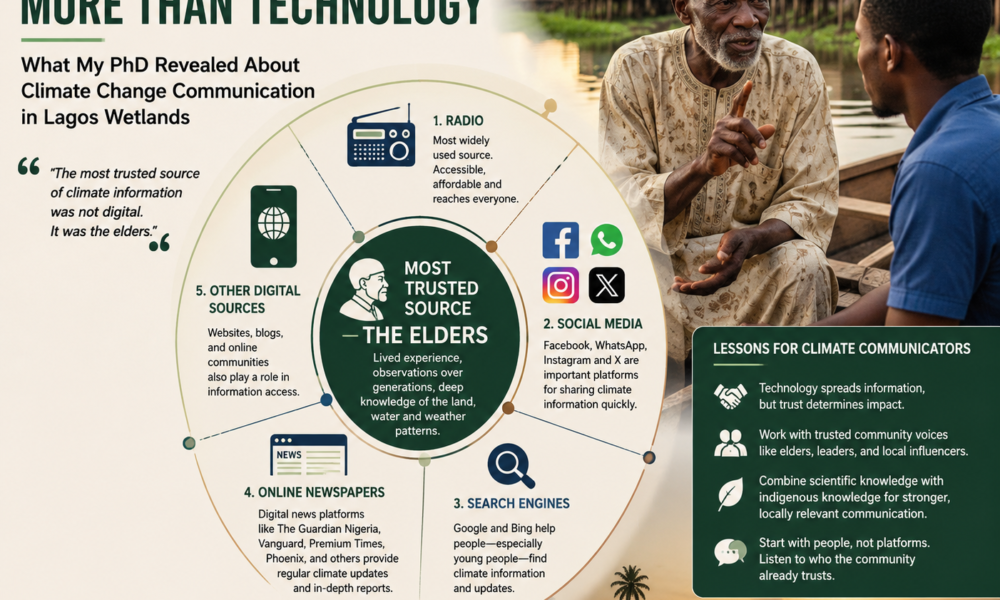
The study identified five major sources through which residents accessed information about climate change.
Radio emerged as the most widely used source.
This was hardly surprising. Despite the rapid growth of digital technology, radio remains one of the most accessible and affordable communication platforms in many parts of Africa. It reaches communities regardless of literacy level, internet access or income, making it an enduring medium for public education and awareness.
The second major source was social media. Platforms such as Facebook, WhatsApp, Instagram and X have become increasingly important spaces where people encounter environmental news, weather updates and conversations about climate-related events. Information now travels rapidly through personal networks, often reaching communities long before it appears in traditional media.
Residents also relied on search engines such as Google and Bing to seek additional information, particularly younger people with internet-enabled devices. Online newspapers and digital news platforms equally served as valuable sources, providing regular coverage of flooding, environmental degradation and government responses to climate-related challenges.
Taken together, these findings suggest that climate communication in contemporary Africa is becoming increasingly digital.
But the most important finding of the study was not about technology.
It was about trust.
The Most Trusted Source Was Not Digital
When participants were asked which source they trusted most for information about climate change, the answer surprised me.
It was not radio.
It was not Facebook or WhatsApp.
It was not Google.
It was not online newspapers.
It was the elders within their communities.
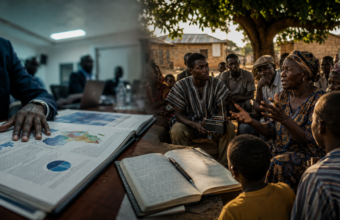
These were individuals who had spent decades observing the same rivers, the same wetlands, the same rainfall patterns and the same seasonal cycles. Their knowledge was not acquired through formal scientific training but through continuous interaction with their environment over many years.
Community members regarded them as credible because their observations had repeatedly proved reliable.
They remembered when the rains normally began.
They knew which parts of the community flooded first.
They recognised subtle changes in vegetation, water levels and seasonal patterns that younger generations often overlooked.
Their authority was rooted not in technology but in lived experience.
In many respects, they functioned as local environmental historians.
Trust Is the Missing Dimension in Climate Communication
One of the most important lessons from this research is that access to information does not automatically translate into trust.
Development agencies and policymakers often focus on expanding communication channels. More radio programmes are produced. More social media campaigns are launched. More digital platforms are created.
These investments are valuable.
However, communication is not simply about transmitting information.
It is about whether people believe the messenger.
Environmental communication scholars have long argued that credibility is central to effective communication. Messages are more likely to influence behaviour when they come from sources that communities perceive as trustworthy, knowledgeable and relatable.
My research reinforces this principle.
The challenge for climate communicators is therefore not merely to increase the volume of information available but to understand the social relationships through which information gains legitimacy.
Technology can deliver messages.
Trust determines whether those messages are accepted.
Bridging Science and Indigenous Knowledge
Recognising the importance of trusted community figures does not mean rejecting scientific knowledge.
On the contrary, it presents an opportunity to strengthen climate communication.
Scientific evidence and indigenous environmental knowledge should complement one another rather than compete.
Scientists provide data that help explain long-term climate trends, while community elders contribute detailed local observations accumulated through years of experience.
When these two knowledge systems are brought together, climate communication becomes more relevant, more culturally grounded and more likely to inspire action.
Rather than treating local knowledge as anecdotal, climate communication strategies should recognise it as an important resource for understanding environmental change within specific communities.
Lessons for Climate Communicators
The implications extend far beyond Lagos.
Across Africa, many climate communication initiatives continue to prioritise technology while overlooking the human relationships that shape how information is received and interpreted.
A well-designed communication campaign should not begin by asking, “Which platform should we use?”
It should begin by asking, “Whom do people already trust?”
The answer may differ from one community to another.
In some places, it may be traditional leaders.
Elsewhere, it may be religious leaders, teachers, women’s associations or youth organisations.
The point is simple: effective climate communication starts with understanding existing networks of trust.
Technology should strengthen those relationships, not replace them.
Conclusion
My PhD research confirmed that climate information in Lagos wetland communities flows through multiple channels, from radio and social media to search engines and online newspapers. Yet the most trusted source remained the people who had lived with the environment the longest.
This finding reminds us that climate communication is ultimately a human endeavour.
As communicators, researchers and policymakers, we should certainly embrace digital innovation and emerging technologies. But we must also remember that the most powerful communication does not always come from the newest platform.
Sometimes it comes from the oldest voice in the community.
Because when it comes to climate communication, trust is not an optional ingredient.
It is the foundation upon which meaningful understanding, collective action and long-term resilience are built.

No Comment! Be the first one.