



When Climate Adaptation Ignores the Poor: Why African Slums Are Missing from the Resilience Conversation
Across Africa, governments are increasingly talking about climate adaptation. There are national adaptation plans, urban resilience strategies, climate policies, disaster management frameworks and...

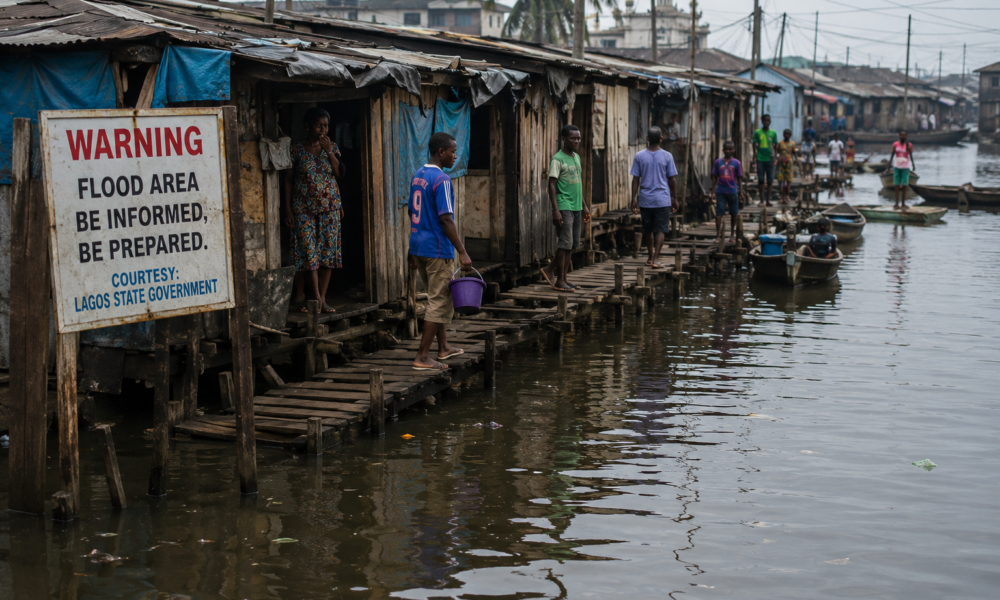
Across Africa, governments are increasingly talking about climate adaptation.
Table Of Content
- The City We Plan for and the City That Exists
- Vulnerability Is Not Just About Geography
- The People Who Flood First Often Recover Last
- Where Are the Early Warning Systems?
- The Problem with Treating Informal Settlements as Temporary
- Adaptation Must Begin with Listening
- Communication Must Move in Both Directions
- Adaptation Without Inclusion Is Not Resilience
- The Question We Must Ask
There are national adaptation plans, urban resilience strategies, climate policies, disaster management frameworks and international commitments. Many of these documents are detailed, technically sophisticated and supported by significant funding.
But there is a question we must ask:
Who are these plans actually designed to protect?
Because in many African cities, the people most exposed to climate risks are also the people least visible in the policies created to address those risks.
They live in informal settlements, slums, unplanned communities and low-income neighbourhoods. They live beside rivers, wetlands, lagoons, drainage channels, waste dumps and coastlines. They are often the first to experience flooding and the last to recover from it.
And yet, when climate adaptation plans are developed, these communities are frequently treated as an afterthought.
The City We Plan for and the City That Exists
One of the uncomfortable realities of urban climate planning is that governments often plan for the city they want—not necessarily the city that exists.
The planned city has roads, drainage systems, formal housing, emergency services and clearly defined infrastructure.
The real city is more complicated.
It includes communities that have developed outside formal planning systems because formal housing is unaffordable or unavailable. It includes people who have built lives in places that governments may describe as illegal, even though those communities have existed for decades.
Consider communities such as Makoko in Lagos, Nima in Accra and Kibera in Nairobi.
These places are not simply geographical locations on a map. They are home to millions of people whose lives, businesses, families and social networks are deeply rooted in their communities.
Yet their vulnerability is often discussed without their voices being adequately included in decision-making.
This is where climate adaptation becomes a communication issue as much as a policy issue.
Vulnerability Is Not Just About Geography
People often say that informal settlements are vulnerable because they are located in risky areas.
That is only part of the story.
Vulnerability is also created by exclusion.
A community without reliable drainage is more vulnerable to flooding.
A community without secure land tenure may be less likely to receive public infrastructure.
A community without access to official information may not receive timely early warnings.
A community without political influence may struggle to make its concerns heard.
In other words, vulnerability is not simply something that happens to people. It is often produced by decisions about whose needs are prioritised and whose needs are ignored.
This is why climate adaptation cannot be reduced to building walls, roads and drainage channels.
It must also ask: Who is included in the planning process? Who is heard? Who is represented?
The People Who Flood First Often Recover Last
When heavy rainfall hits an African city, informal settlements are often among the first places to flood.
Their homes may be built with less durable materials. Drainage infrastructure may be inadequate. Waste may block waterways. Access roads may become impassable.
For families already living with economic insecurity, a flood can be devastating.
A wealthy household may lose furniture and repair a damaged building.
A low-income family may lose the tools of its livelihood, its food, its documents, its home and its ability to earn an income—all at once.
Recovery is therefore not equal.
This is an important point that climate communication often fails to capture. The same rainfall event can produce very different consequences for different people.
Climate risk is experienced through social inequality.
Where Are the Early Warning Systems?
One of the most basic principles of disaster risk reduction is early warning.
People need to know when danger is approaching. They need to understand what the warning means. They need to know what action to take and where to go.
Yet many informal communities remain poorly served by formal early-warning systems.
Sometimes the information does not reach them in time.
Sometimes it is delivered in technical language that is difficult to understand.
Sometimes there is no safe place to evacuate to.
Sometimes people receive the warning but cannot leave because their livelihoods, possessions or family responsibilities tie them to the community.
This reveals an important truth:
A warning is not enough.
An effective early-warning system must be trusted, accessible, understandable and connected to realistic options for action.
You cannot tell people to evacuate without providing somewhere safe for them to go.
The Problem with Treating Informal Settlements as Temporary
Another reason these communities are often overlooked is the assumption that they are temporary.
Governments may regard informal settlements as spaces that will eventually be demolished, relocated or replaced by formal developments.
But many of these communities have existed for generations.
People have built homes, businesses, schools, religious institutions and social networks there.
The fact that a community is informal does not mean that its residents are temporary human beings.
Yet when a settlement is viewed as temporary, long-term investment in drainage, sanitation, roads, health services and climate resilience becomes politically difficult.
This creates a dangerous cycle.
The community remains vulnerable because it lacks infrastructure.
It is denied infrastructure because it is considered informal.
And when disaster occurs, the same community is blamed for its vulnerability.
Adaptation Must Begin with Listening
Climate adaptation is often presented as a technical exercise.
Experts develop models. Engineers design infrastructure. Consultants produce reports. Governments approve plans.
All of these processes are important.
But adaptation also requires listening.
Residents of informal settlements possess knowledge that may not appear in official climate assessments.
They know which streets flood first.
They know how quickly the water rises.
They know which drainage channels are blocked.
They know which routes become dangerous.
They know which households contain elderly people, children or people living with disabilities.
This knowledge is not a replacement for scientific expertise.
It is a necessary complement to it.
A climate plan designed without the knowledge of the people living with climate risk is incomplete by definition.
Communication Must Move in Both Directions
Too often, climate communication is treated as a one-way process.
Governments and experts communicate information to communities.
But effective adaptation requires two-way communication.
Communities must not only receive information. They must also be able to communicate their experiences, needs and priorities back to decision-makers.
This is particularly important in informal settlements, where residents may have limited access to formal political channels.
Community radio, local leaders, religious institutions, schools, women’s groups, youth networks and digital platforms can all play important roles in creating more inclusive climate communication.
The objective should not simply be to tell vulnerable communities what to do.
It should also be to ask them what they need.
Adaptation Without Inclusion Is Not Resilience
There is a growing global conversation about climate resilience.
But resilience should not mean asking poor communities to continue absorbing shocks indefinitely.
A community that survives repeated floods without adequate infrastructure is not necessarily resilient.
It may simply be neglected.
We must be careful not to romanticise the ability of vulnerable communities to endure suffering. People should not have to prove their resilience by surviving conditions that public policy could have prevented or reduced.
True adaptation must reduce exposure, reduce vulnerability and increase people’s capacity to recover.
That requires investment.
It requires better planning.
It requires infrastructure.
It requires social protection.
And it requires the meaningful participation of the people most affected.
The Question We Must Ask
As African cities grow and climate risks intensify, the question is no longer whether informal settlements will be affected by climate change.
They already are.
The more important question is whether climate adaptation will continue to treat these communities as invisible.
If governments plan only for the formal city, they will fail to protect the real city.
If policies are designed without the participation of the people most exposed to risk, they will remain incomplete.
And if climate communication moves only from institutions to communities, rather than in both directions, important knowledge will continue to be lost.
The people living in Africa’s informal settlements are not merely victims waiting to be rescued.
They are residents, workers, parents, entrepreneurs, community leaders and citizens.
They have knowledge.
They have ideas.
They have a stake in the future of the cities they help build and sustain.
Climate adaptation must therefore begin with recognition.
Recognition that the informal city is still the city.
Recognition that vulnerability is often produced by exclusion.
And recognition that communities cannot be protected by policies that refuse to see them.
Because adaptation that ignores the margins is not adaptation.
It is abandonment.


No Comment! Be the first one.