



Africa Did Not Cause the Climate Crisis — Yet It Pays the Highest Price
Africa produces less than four per cent of global carbon emissions.Yet it bears the heaviest cost of climate change. That simple fact should trouble us more than it does. This is not misfortune.It is...

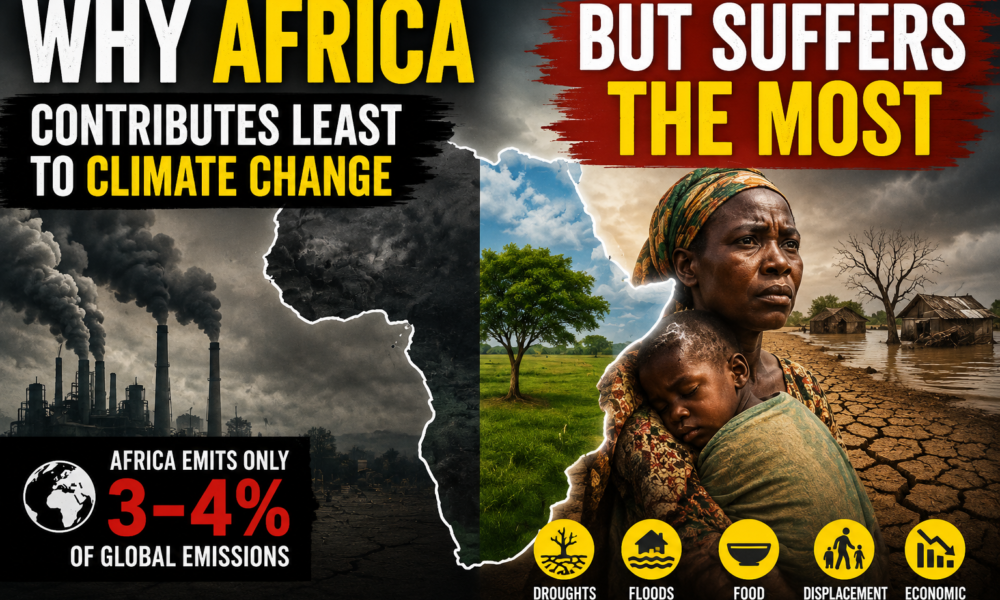
Africa produces less than four per cent of global carbon emissions.
Yet it bears the heaviest cost of climate change.
That simple fact should trouble us more than it does.
This is not misfortune.
It is not bad luck.
It is not nature being unkind.
It is injustice.
Across the continent, droughts are lasting longer. Floods are arriving with greater force. Harvests that once sustained families are failing with frightening regularity. Rivers no longer behave as they used to. Seasons arrive late, or not at all. And with each disruption, lives unravel quietly.
What makes this particularly painful is not only the suffering itself, but who is suffering.
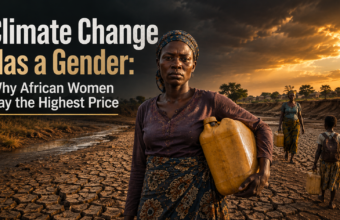
Many of the communities losing everything have never owned a factory. They have never drilled for oil. They have never filled a fuel tank, boarded a private jet, or benefited from the carbon-intensive development that built modern industrial wealth. Yet they are watching their farms wash away, their homes submerge, and their futures shrink.
The industrialised world built prosperity on carbon.
Africa is paying the bill.
This imbalance is often described in polite language: vulnerability, exposure, risk. But behind those words are real people making impossible choices — whether to stay on land that no longer yields crops, or to migrate in search of survival. Whether to rebuild after floods they did not cause, or to accept loss as a new normal.
To be clear, this conversation is not about blame for its own sake. It is about responsibility. And responsibility matters because it shapes who acts, who pays, and who is heard.
Climate change is not just an environmental problem; it is a historical one. The emissions driving today’s crisis were produced over centuries of industrial expansion that excluded Africa from its rewards while binding it to its consequences. That history cannot be erased with good intentions or recycled pledges.
Yet, Africa is often spoken about only as a victim — a continent waiting for aid, solutions, or rescue from elsewhere. This framing is incomplete, and frankly, unfair.
African communities have been adapting to environmental uncertainty for generations. Long before climate change became a global policy issue, farmers were reading the sky, managing scarce water, rotating crops, and surviving ecological stress with ingenuity and resilience. There is knowledge here — deep, local, lived knowledge — that does not always make it into reports or conferences.
Understanding climate injustice, therefore, is not only about acknowledging harm. It is also about recognising agency.
Accountability must go hand in hand with investment — not charity, but partnership. Climate finance must reach the communities most affected, not remain trapped in bureaucratic loops. Adaptation strategies must be shaped with African voices, not imposed upon them. And global climate conversations must move beyond sympathy towards structural change.
Africa deserves better than to suffer quietly.
Better than to be reduced to statistics.
Better than to be last in line for solutions to a crisis it did not create.
If the world is serious about climate justice, it must start by listening — honestly and humbly — to those paying the highest price.
Because climate change may be global, but its burdens are not shared equally.
And until that changes, the crisis remains not just environmental, but profoundly moral.

No Comment! Be the first one.