



The Difference Between Western and African Climate Narratives: Why the Same Crisis Tells Two Stories
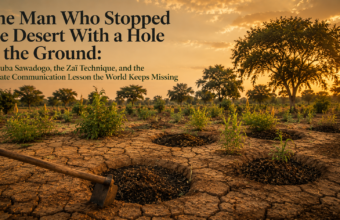
Two people stand on the same cracked land. The soil is dry. The river has retreated. Crops have failed. One person calls it a climate crisis. The other calls it a season they have known before. Same...

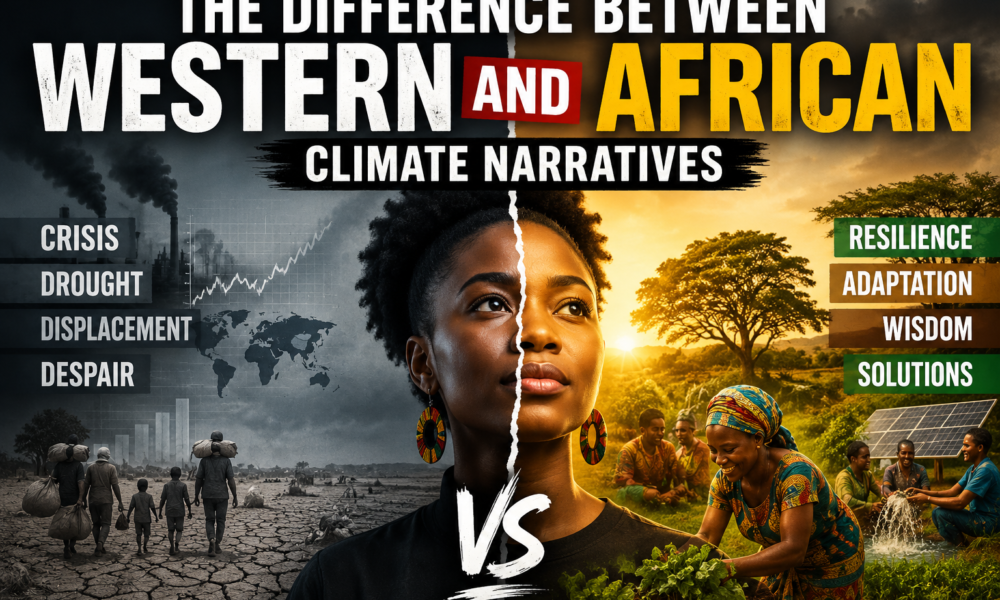
Two people stand on the same cracked land.
Table Of Content
The soil is dry. The river has retreated. Crops have failed. One person calls it a climate crisis. The other calls it a season they have known before.
Same drought. Same heat. Same absence of rain.
Completely different story.
This difference is not accidental. It is the result of how climate change is framed, who is doing the framing, and whose knowledge is considered legitimate.
How the West Learned to Talk About Climate
Western climate narratives are built largely on numbers. Graphs. Satellite images. Emissions targets. Predictive models stretching fifty or a hundred years into the future. There is urgency in this language, and rightly so. Climate change is an emergency.
But the dominant Western narrative asks a very specific set of questions:
- How much has been lost?
- How fast is the damage increasing?
- How soon before systems collapse?
These questions are important. They mobilise funding, influence policy, and shape global climate agreements. Without them, climate change might still be dismissed as a distant or abstract threat.
Yet there is a limitation here. Western narratives often treat climate change as something new, something that has suddenly interrupted a previously stable world.
For many Africans, that assumption simply does not hold.
African Climate Stories Did Not Begin With Carbon Data
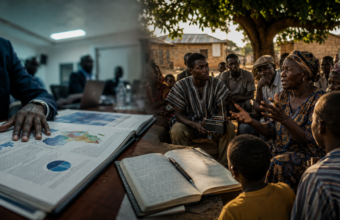
Across much of Africa, climate variability is not a recent discovery. Long before climate reports and international summits, communities were already reading the land.
Farmers noticed when planting seasons shifted. Fisherfolk observed changes in tides and fish migration. Pastoralists adjusted grazing routes when rainfall patterns altered. These were not written in peer-reviewed journals, but they were recorded—in memory, in proverbs, in rituals, in everyday survival.
African climate narratives are not built first on urgency. They are built on relationship.
Relationship with land.
Relationship with water.
Relationship with ancestors who lived through similar changes.
Where Western narratives often ask what is happening, African narratives also ask:
- Why is this happening?
- Who changed the balance?
- Who benefits from the damage?
- Who is being asked to adapt, again?
These are political questions as much as environmental ones.
Adaptation Is Not New Here
One of the quiet ironies of global climate discourse is this: Africa is often described as “vulnerable”, yet African communities have been adapting to environmental stress for centuries.
Terraced farming, mixed cropping, seasonal migration, seed preservation, water-sharing customs—these are not experimental innovations. They are climate technologies, refined through lived experience.
The problem is not that Africa lacks solutions. The problem is that these solutions rarely fit neatly into Western funding frameworks.
One narrative attracts grants.
The other holds practical wisdom.
Whose Knowledge Counts?
Today, global climate conversations are dominated by voices from the Global North. Conferences are held in polished halls far from the communities most affected. Reports are written in technical language inaccessible to those living the reality they describe.
African perspectives are often invited late—if at all—and usually as case studies, not as theory-makers.
This imbalance matters.
When only one narrative is heard, climate action becomes incomplete. Solutions are imposed rather than co-created. Projects fail not because communities resist change, but because the change does not respect their realities.
The World Needs Both Narratives
This is not an argument against science. Data matters. Projections matter. Urgency matters.
But data without memory is shallow, and urgency without context can be harmful.
Western climate narratives bring scale, resources, and global coordination. African climate narratives bring depth, continuity, and grounded adaptation.
One measures loss.
The other remembers survival.
One warns of the future.
The other explains the past—and how people endured it.
The world does not need to choose between them. It needs to listen to both.
Why This Conversation Cannot Be Ignored
As climate impacts intensify, the cost of ignoring African narratives will only grow. Policies will continue to miss their targets. Interventions will remain disconnected from lived realities. And communities will keep adapting—this time with even fewer resources.
Climate change is not just a scientific problem. It is a storytelling problem.
And right now, too many voices are missing from the story.
If you want climate conversations that centre African knowledge, lived experience, and uncomfortable truths—subscribe to this channel. We tell the stories climate science keeps leaving out.


No Comment! Be the first one.