



Book Review: Half of a Yellow Sun
Author: Chimamanda Ngozi AdichieYear of Publication: 2006Genre: Historical FictionSetting: Nigeria (1960s – Nigerian Civil War/Biafran War) Introduction Half of a Yellow Sun is a powerful and deeply...

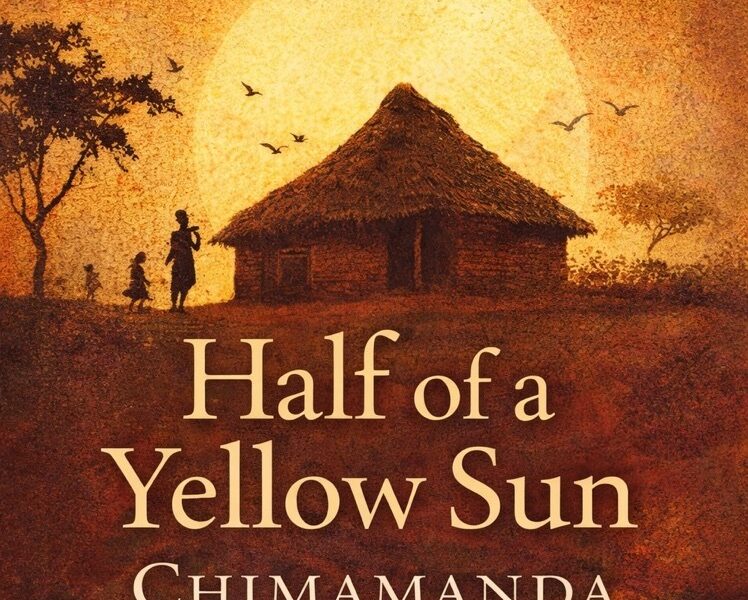
Author: Chimamanda Ngozi Adichie
Year of Publication: 2006
Genre: Historical Fiction
Setting: Nigeria (1960s – Nigerian Civil War/Biafran War)
Introduction
Half of a Yellow Sun is a powerful and deeply moving novel by Chimamanda Ngozi Adichie that explores the human cost of the Nigerian Civil War (1967–1970). Through richly drawn characters and an emotionally charged narrative, Adichie tells a story not just about war, but about love, loyalty, identity, and survival. The novel is widely regarded as one of the most important African literary works of the 21st century.
Summary of the Book
The novel centres on the lives of three main characters: Ugwu, a young village boy who becomes a houseboy to a university professor; Olanna, a well-educated woman from a wealthy Nigerian family; and Richard, a British writer who falls in love with Nigeria and with Olanna’s twin sister, Kainene.
Set against the backdrop of Nigeria’s independence and the subsequent Biafran War, the story follows how political instability and ethnic tensions gradually disrupt ordinary lives. As the war intensifies, the characters are forced to confront hunger, displacement, loss, and moral dilemmas. Personal relationships are tested, ideals are shattered, and survival becomes a daily struggle.
The title refers to the symbol on the Biafran flag — a half of a yellow sun — representing hope, resilience, and the dream of self-determination.
Themes
One of the novel’s strongest elements is its exploration of war and its consequences. Adichie focuses not on battlefield heroics but on the everyday suffering of civilians. Themes of love and betrayal, colonial legacy, ethnic identity, intellectual responsibility, and the power of storytelling run throughout the book.
Another key theme is silenced history. Adichie gives voice to a conflict that is often overlooked in global narratives, insisting that African histories deserve to be told with honesty and depth.
Characterisation
The characters in Half of a Yellow Sun are complex, believable, and emotionally compelling. Ugwu’s transformation from an innocent boy to a war-hardened young man is particularly striking. Olanna embodies compassion and moral strength, while Kainene stands out as sharp, pragmatic, and fiercely independent. Richard’s outsider perspective allows readers to see Nigeria through both foreign and intimate lenses.
Style and Language
Adichie’s writing is clear, lyrical, and emotionally restrained, making the horrors of war even more impactful. Her use of multiple perspectives enriches the narrative and allows readers to experience events from different social and emotional positions. The language is accessible yet literary, balancing storytelling with historical insight.
Critical Evaluation
Half of a Yellow Sun succeeds both as a historical novel and as a deeply personal story. Its greatest strength lies in its ability to humanise history, reminding readers that wars are lived through ordinary people. While the novel is emotionally intense, it never feels exploitative; instead, it remains thoughtful, humane, and reflective.


No Comment! Be the first one.