



From Plastic Waste to Economic Opportunity: How Lagos Can Turn Pollution into Profit
Every day in Lagos, thousands of tonnes of plastic waste are generated from homes, offices, markets and commercial centres. Water sachets, bottles, packaging materials and disposable plastics form a...

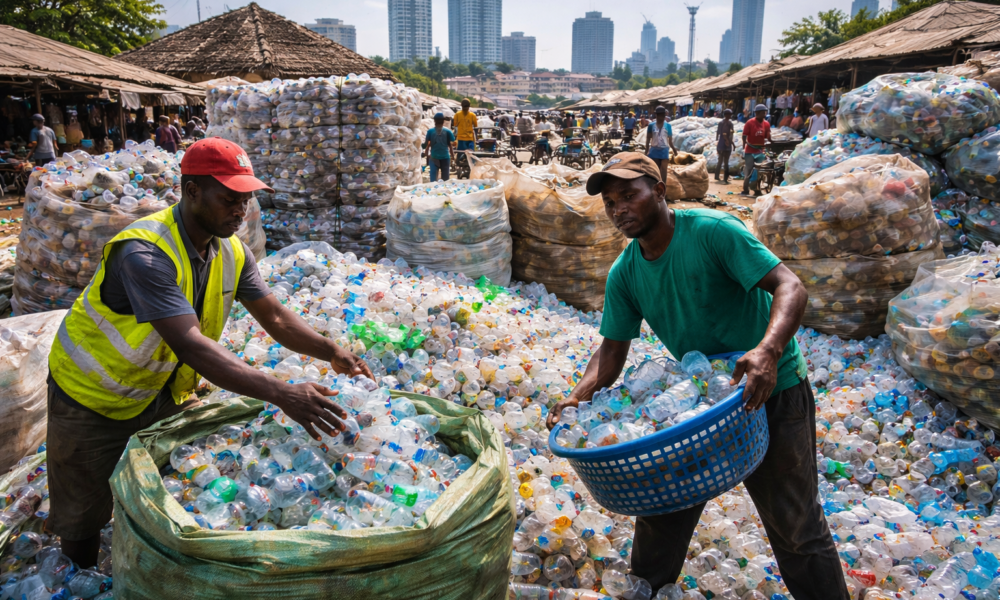
Every day in Lagos, thousands of tonnes of plastic waste are generated from homes, offices, markets and commercial centres. Water sachets, bottles, packaging materials and disposable plastics form a visible part of the city’s waste stream. While plastic pollution is often framed purely as an environmental concern, global experience suggests a different narrative is possible — one in which plastic waste becomes a source of income, jobs and sustainable enterprise.
A Growing Waste Stream with Economic Value
Nigeria generates an estimated 2.5 million tonnes of plastic waste annually, with Lagos accounting for a significant share due to its large population and commercial activity. Estimates suggest that Lagos alone produces over 2,000 tonnes of plastic waste every day. Yet only a small fraction of this material is formally recycled.
According to the Organisation for Economic Co-operation and Development (OECD), “plastic pollution is growing relentlessly as waste management and recycling systems fail to keep pace with production.” Globally, the OECD estimates that less than 10 per cent of plastic waste is recycled, leaving a large volume available for recovery and reuse.
For cities like Lagos, this gap represents not just an environmental challenge, but a missed economic opportunity.
Global Lessons: How Recycling Becomes Profitable
Across Europe, Asia and parts of Africa, plastic recycling has evolved into a structured economic sector. The United Nations Environment Programme (UNEP) notes that “plastic waste, when properly collected and processed, can support livelihoods and contribute to local economies through circular business models.”
In Germany, deposit-return schemes for plastic bottles have pushed recovery rates above 90 per cent, transforming plastic packaging into a returnable commodity rather than disposable waste. In Canada and parts of Asia, recycling enterprises operate buy-back centres where plastic is exchanged for cash, ensuring a steady supply of recyclable materials.
Social enterprises such as Plastic Bank, operating in countries including Indonesia, the Philippines and Egypt, have shown how plastic collection can directly generate income at community level. Their model links plastic waste recovery to payments or essential services, while the collected material is sold back into global manufacturing supply chains.
What This Means for Lagos and Nigeria
Lagos already possesses one of the most important ingredients for a successful recycling economy: a large and active informal waste-picking sector. Thousands of people earn livelihoods through waste collection and sorting, yet much of this activity remains unstructured and under-resourced.
The World Bank, in its assessment of waste management in developing cities, observes that “integrating informal waste workers into formal recycling systems improves efficiency, increases recovery rates and enhances incomes.” This insight is particularly relevant for Lagos, where waste pickers already play a central role in material recovery.
By strengthening collection systems, improving sorting practices and supporting recycling enterprises, plastic waste can move up the value chain — from discarded material to tradable commodity.
Where the Money Is
Not all plastics carry the same value. International markets consistently demand:
- PET plastics, commonly used for water and soft drink bottles
- HDPE plastics, found in detergent containers and jerrycans
- LDPE plastics, used in sachet water packaging and nylon bags
Recycled PET is especially valuable. In Europe, demand for recycled PET exceeds three million tonnes annually, driven by packaging regulations and sustainability targets. This same material, abundant in Lagos, can be processed locally or sold into regional markets.
The global plastic recycling market was valued at over USD 35 billion in 2022 and is projected to exceed USD 45 billion by 2027, according to industry data cited by UNEP and the OECD. These figures highlight the scale of opportunity available to countries that invest in recycling systems.
From Collection to Manufacturing
International experience shows that profit increases as plastic moves through the value chain. Selling sorted plastics provides immediate income. Shredding and baling raise resale value by reducing processing costs. Manufacturing finished products — such as plastic planks, roofing sheets and reusable bags — generates the highest returns.
UN-Habitat reports that recycled plastic lumber lasts three to five times longer than wood, making it suitable for public infrastructure such as benches, walkways and school furniture. In several countries, governments and private developers now favour recycled plastic products due to durability and low maintenance costs.
A Shift in Thinking
Plastic waste in Lagos is often seen as a burden to be managed. International evidence suggests it can instead be viewed as a resource to be organised, valued and monetised. As UNEP states, “the transition to a circular plastics economy requires seeing waste as a material with economic potential, not as an end-of-life product.”
For Lagos and Nigeria, the path forward lies in strengthening recycling infrastructure, supporting small-scale entrepreneurs, integrating informal collectors and encouraging investment in value-added plastic manufacturing.
Turning a Challenge into an Opportunity
As global demand for recycled materials grows and sustainability becomes central to supply chains, plastic recycling offers Lagos an opportunity to address environmental concerns while expanding economic opportunities. With the right incentives, partnerships and investment, plastic waste can move from gutters and landfills into factories, markets and livelihoods — transforming pollution into profit.






No Comment! Be the first one.