



Lagos’ Vanishing Wetlands: Development at the Cost of Natural Defences
Lagos’ rapid urban expansion is eroding its natural shield against floods and coastal erosion. As wetlands and mangroves disappear under pressure from development, experts warn that the city is...

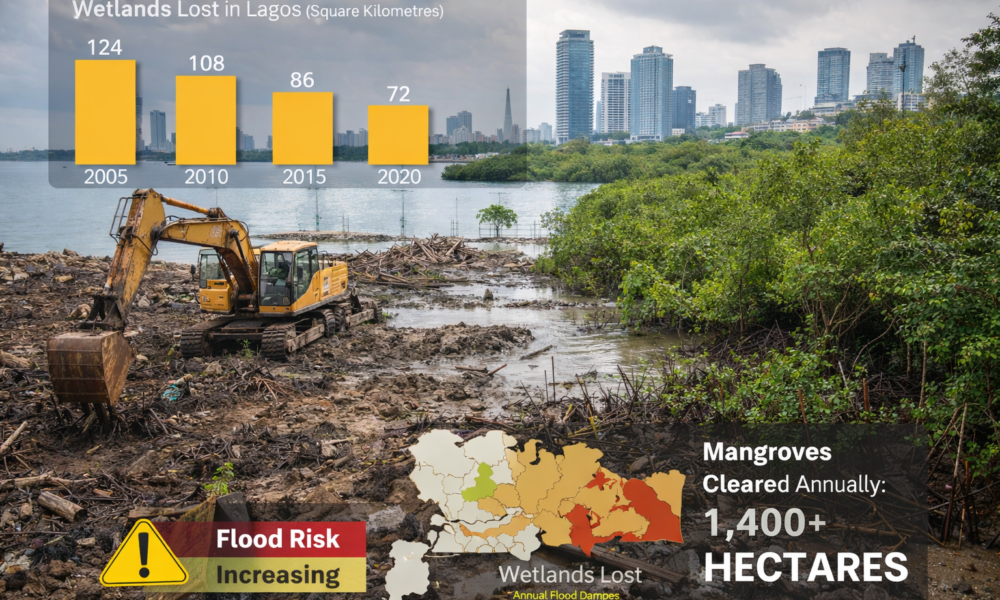
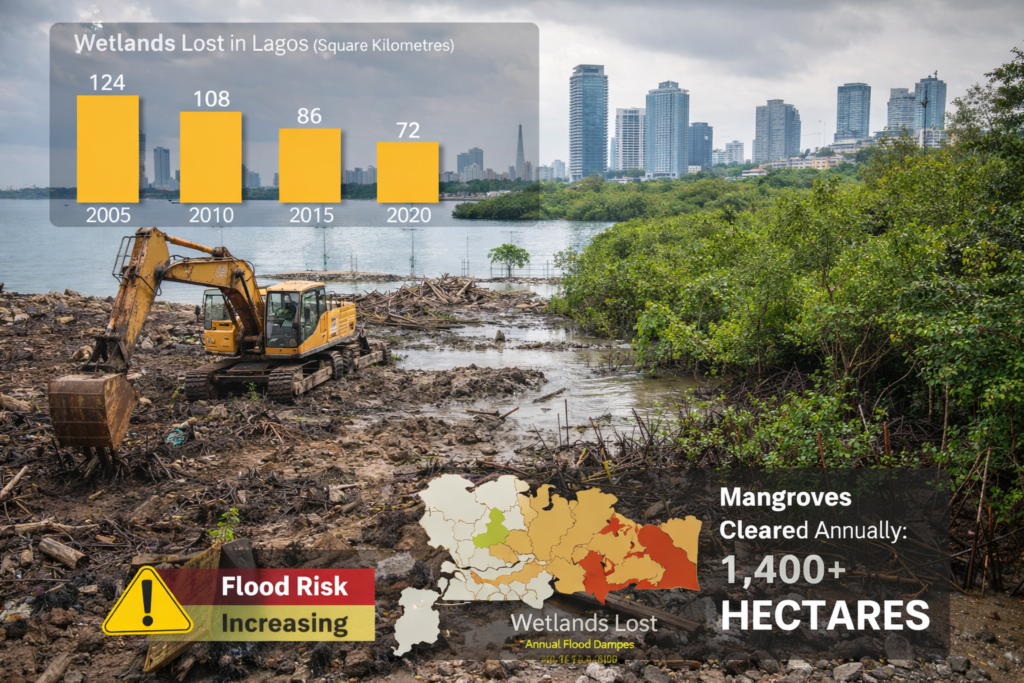
Lagos, Nigeria’s commercial powerhouse, is growing at a breathtaking pace, but its rapid development is taking a heavy toll on the city’s natural defences. Wetlands, mangroves, and other critical buffers that once protected communities from flooding, storm surges, and shoreline erosion are disappearing at an alarming rate. According to the Ramsar Convention on Wetlands, Nigeria has lost more than 35 per cent of its wetlands in recent decades, and Lagos accounts for a significant share of this decline. The city’s wetlands, particularly in areas like Lekki, Badagry, and along the Lagos Lagoon, are being drained or reclaimed to make way for housing estates, industrial zones, and infrastructure projects, often with little regard for long-term environmental consequences.
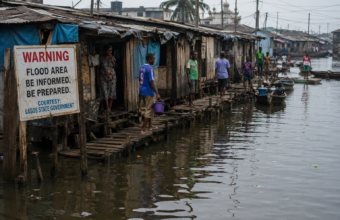
Mangroves, which cover parts of the Lagos coastline and the Lagos Lagoon, are also under severe pressure. UNEP reports that Nigeria loses thousands of hectares of mangroves every year due to urban expansion and land reclamation. These ecosystems play a critical role in reducing coastal erosion, filtering pollutants, and supporting fisheries that sustain local communities. In Lagos, the effects of their loss are already evident: areas that rarely experienced flooding two decades ago now face inundation after moderate rainfall, while the fish population in riverine communities has declined due to the destruction of breeding grounds.
Recognising the threats, the Lagos State government has taken steps to protect the city’s remaining wetlands and mangroves. Shoreline protection projects, including the construction of breakwaters and sand replenishment initiatives, have been introduced to reduce erosion in vulnerable coastal areas. Mangrove restoration programmes, often in partnership with NGOs and local community groups, aim to replant degraded areas, while climate adaptation plans have been integrated into broader urban development strategies. Public awareness campaigns have also been launched to educate communities on the importance of preserving wetlands as natural infrastructure that mitigates flooding and supports biodiversity.
Despite these efforts, significant gaps remain. Large sections of wetlands and mangroves remain unprotected, and illegal land reclamation continues in several parts of the city due to weak enforcement of environmental regulations. Environmental impact assessments, while legally required, are sometimes treated as formalities, allowing construction projects to encroach on ecologically sensitive areas. Experts also point to limited community engagement and a lack of accurate, up-to-date data on wetland and mangrove coverage, which makes planning and monitoring difficult. According to the World Bank, cities that fail to protect their natural buffers face increased flood risks and higher economic losses, and Lagos is already feeling these impacts with billions of naira in damages reported annually from seasonal flooding.
Environmental scientists stress that Lagos cannot rely solely on engineered solutions like sea walls. Nature-based strategies — expanding mangrove belts, conserving remaining wetlands, and integrating green infrastructure into urban planning — are more cost-effective and sustainable in the long term. The Intergovernmental Panel on Climate Change (IPCC) notes that “nature-based solutions are among the most effective ways to reduce climate risk,” highlighting the urgent need to prioritise the protection of natural buffers.
For Lagos, the challenge is clear: development must coexist with ecological preservation. Protecting and restoring the city’s wetlands and mangroves is no longer optional; it is essential to safeguard lives, livelihoods, and the future of the metropolis. Without immediate action, the city risks further flooding, accelerated coastal erosion, and the loss of vital fishery resources — a high price for unchecked urban growth.


No Comment! Be the first one.